Why Kids' Cavities in Milk Teeth Are Not "Fine to Ignore" The Hidden Damage to Adult Teeth
It’s just a milk tooth, it’ll fall out anyway.
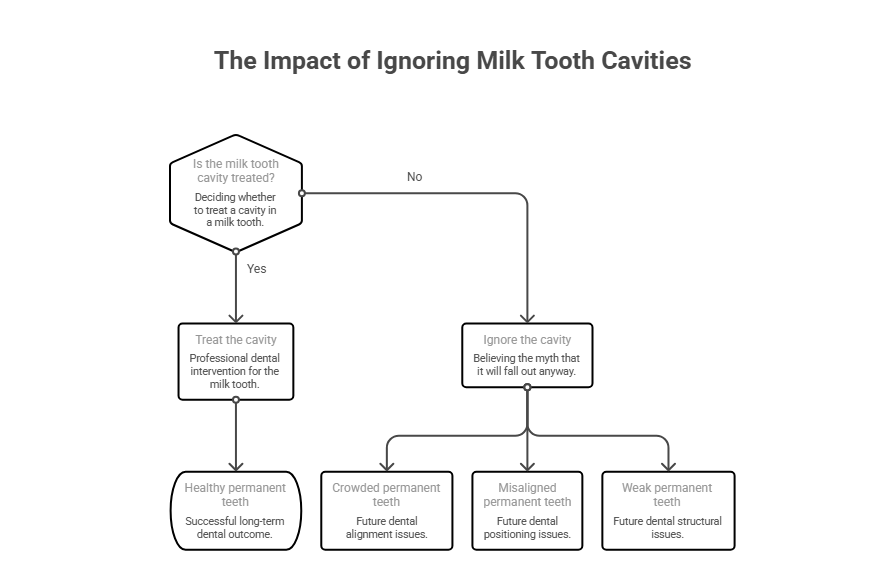
If you’ve ever said this or heard your parents say it about your own childhood cavities you’re repeating one of the most common and most costly myths in Indian households. It feels logical on the surface. But it’s also the reason so many adults today deal with crowded, misaligned, or weak permanent teeth that trace back to a “harmless” cavity nobody treated when they were seven.
Let’s actually look at what a cavity in a milk tooth does and why ignoring it can quietly cost your child years of dental problems later.
Do Cavities in Milk Teeth Really Matter If the Tooth Will Fall Out Anyway?
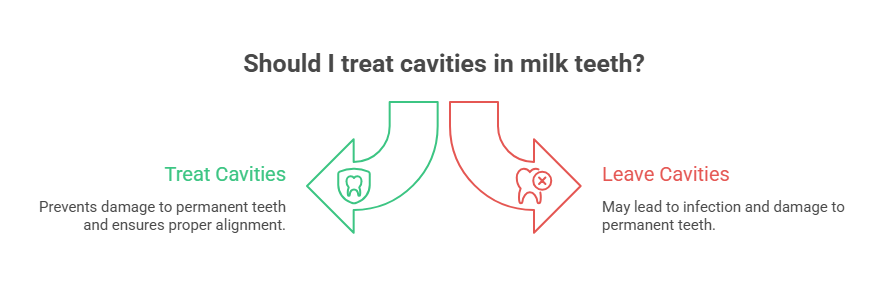
Yes, significantly more than most parents realize. Milk teeth aren’t just placeholders; they’re actively shaping the space, alignment, and even the health of the permanent teeth developing right underneath them. A cavity left untreated in a baby tooth doesn’t just affect that tooth. It affects the tooth waiting beneath it.
Here’s the part that surprises most parents: the permanent tooth bud sits directly under the root of the milk tooth, sometimes just a few millimeters away. An infection in the milk tooth isn’t sealed off from that developing tooth. It’s right next door.
How a Milk Tooth Cavity Actually Damages the Permanent Tooth Underneath
This is the mechanism most dental blogs skip entirely, so let’s slow down here.
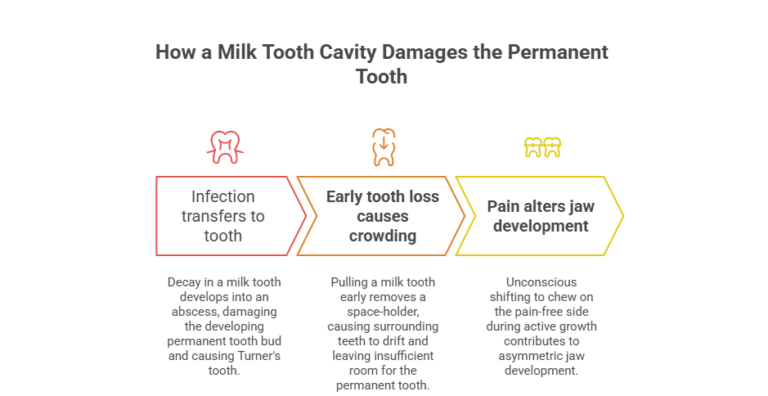
1. Infection can transfer directly to the developing permanent tooth
When decay in a milk tooth reaches the nerve and isn’t treated, it can develop into an abscess, a pocket of infection at the root tip. Because the permanent tooth bud is sitting right there during its most sensitive formation stage, this infection can damage its enamel before it has even erupted. Dentists call this Turner’s tooth a permanent tooth that comes in with visible white or brown discoloration and weakened enamel, purely because of an infection in the milk tooth above it years earlier.
2. Losing a milk tooth early causes crowding later
Milk teeth act as natural space-holders. If a cavity gets bad enough that the tooth has to be pulled early, the teeth on either side don’t just wait patiently for the permanent tooth to arrive, they drift into the empty space. By the time the permanent tooth is ready to erupt, there’s often not enough room left for it. This is one of the most common, and most avoidable, causes of orthodontic treatment later in life.
3. Pain changes how a child chews, and that affects jaw development
Similar to adults, children unconsciously shift to chewing on the pain-free side when a tooth hurts. Done over months or years during active jaw growth, this uneven chewing pattern can contribute to asymmetric jaw development, something far harder to correct at 16 than it would have been to prevent at 6.
Why This Risk Is Higher in Indian Kids Specifically
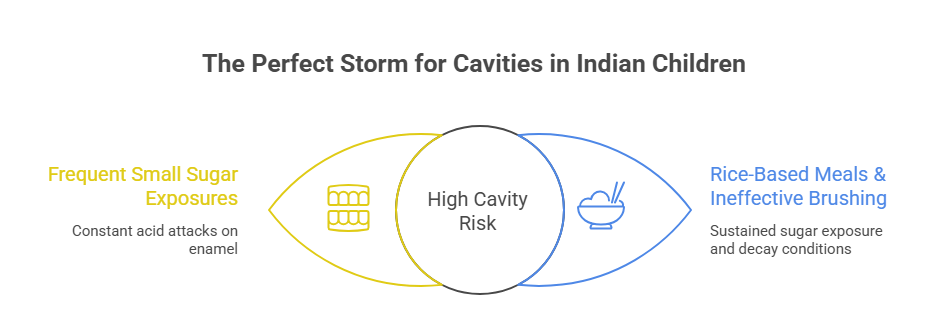
Indian children’s diets tend to combine two specific risk factors that make cavities more likely and more frequent:
Frequent small sugar exposures. Between school tiffins, evening snacks, biscuits with milk, and sweets during festivals or family visits, many children get 4-6 sugar exposures a day rather than just one or two. Each exposure triggers roughly 20-30 minutes of acid attack on the enamel and milk teeth have thinner enamel than permanent teeth, so they’re more vulnerable to begin with.
Rice-based meals eaten frequently and slowly. Rice breaks down into fermentable sugars quickly once it mixes with saliva, and many children eat rice-based meals twice a day. Combined with the fact that young children often don’t brush effectively even when parents supervise, this creates consistent conditions for decay.
None of this means restricting a child’s diet drastically. It means recognizing that milk teeth need more protective attention than most parents give them, not less the opposite of the common assumption.
Early Signs Parents Often Miss
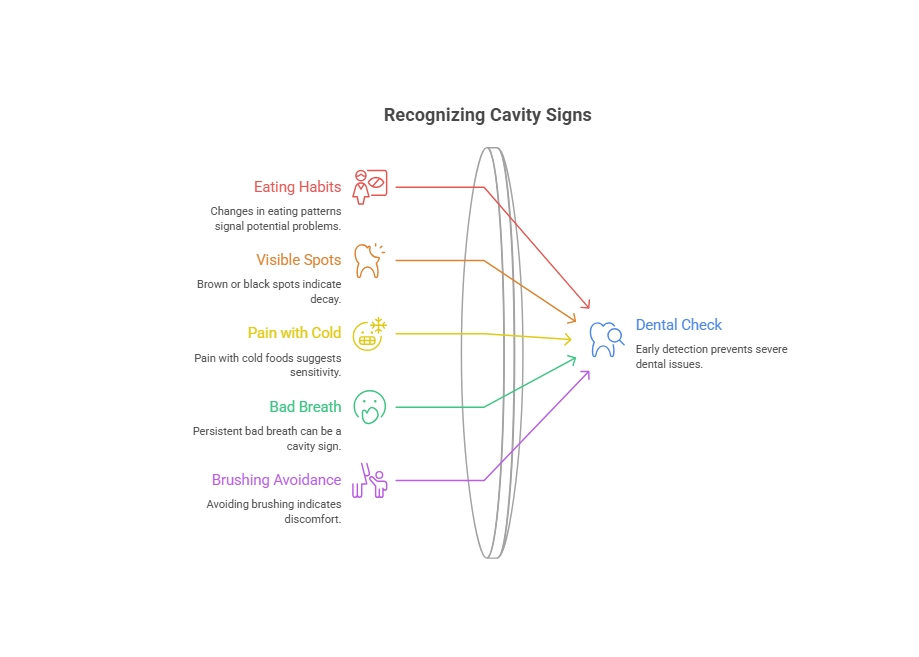
Cavities in kids frequently go unnoticed longer than in adults, because children don’t always express discomfort clearly. Watch for:
- Sudden reluctance to eat on one side, or slower eating overall
- Visible brown or black spots, especially on back molars
- Complaints of pain specifically with cold foods or sweets
- Bad breath that persists despite brushing
- A child avoiding brushing a specific area because it hurts when touched
If your child shows two or more of these, it’s worth a dental check rather than waiting for a toothache to force the issue. By the time a child complains of real pain, the decay has often already reached the nerve.
What Happens If a Milk Tooth Cavity Is Left Untreated
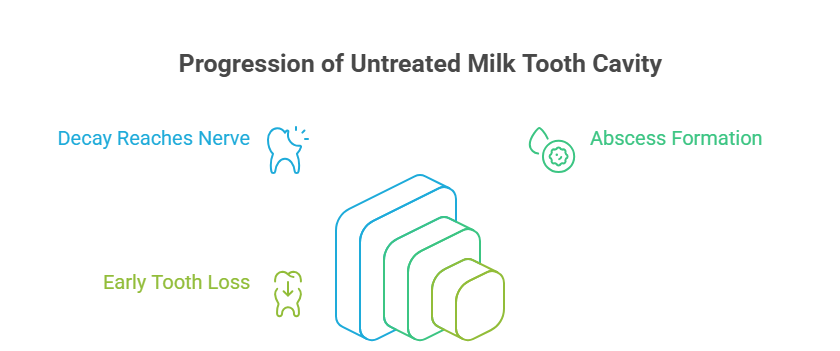
- Surface decay (painless, easy and inexpensive to treat)
- Decay reaching the nerve (sensitivity, sometimes swelling)
- Abscess formation (risk of damage to the permanent tooth bud underneath)
- Early tooth loss (leads to crowding and possible orthodontic needs later)
Stage 1 typically takes one simple visit. Stage 4 can mean years of orthodontic correction down the line a direct, traceable consequence of something that started as a small cavity nobody treated in time.
How Parents Can Actually Prevent This
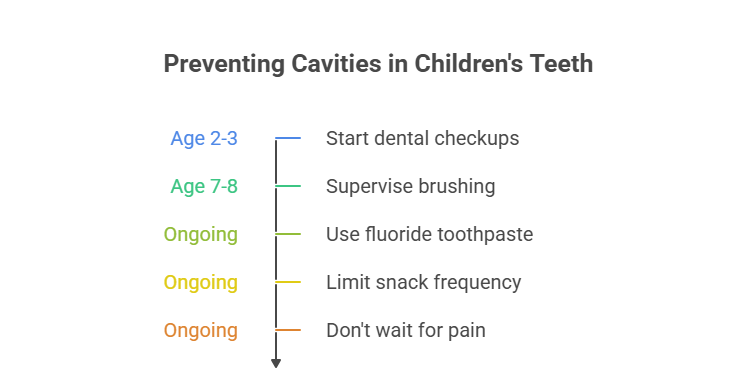
- Start dental checkups by age 2-3, not when a problem shows up. Early visits catch decay while it’s still painless and cheap to fix.
- Supervise brushing until at least age 7-8. Most children lack the motor control to brush effectively on their own before this age, regardless of how well they’ve been taught.
- Use a pea-sized amount of fluoride toothpaste appropriate for their age fluoride actively helps remineralize early decay before it becomes a cavity.
- Limit snack frequency, not just sugar quantity. Four small sugary snacks a day are worse for teeth than one larger treat, because each snack restarts the acid cycle.
- Don’t wait for pain as your signal. By the time a child complains, the cavity has usually already progressed past the easy stage.
Treatment Options for Cavities in Milk Teeth
Depending on how far the decay has progressed, treatment typically includes:
- Fillings for early-to-moderate decay quick and generally painless
- Pulpotomy (a modified root canal for baby teeth) if decay has reached the nerve but the tooth can still be saved
- Stainless steel crowns for teeth with extensive decay that a filling can’t adequately support
- Extraction with a space maintainer if the tooth can’t be saved this small appliance holds the gap open so permanent teeth don’t drift out of position
The right choice depends entirely on how early the cavity is caught, which is exactly why routine checkups matter more than reactive visits.
Finding the Right Care for Your Child's Cavity in Vasant Vihar
If you’ve noticed any of the signs above, the most useful next step is a proper pediatric dental check rather than waiting to see if it gets worse. Catching a milk tooth cavity early is genuinely one of those situations where timing changes the entire outcome for your child’s adult teeth.
At Udana Wellness, children’s cavities are evaluated with this bigger picture in mind not just treating the visible decay, but checking whether the permanent tooth underneath needs any additional monitoring. This matters especially for parents who assume a milk tooth problem is automatically low-stakes.
If you’re looking for a reliable pediatric dentist in Vasant Vihar or simply want a proper cavity treatment in Vasant Vihar for your child, the priority should be a clinic that explains what’s happening beneath the tooth, not just what’s visible on the surface. Udana Wellness takes this diagnosis-first approach, which is particularly relevant for Indian families whose children’s diets carry the frequent-sugar-exposure pattern described above.
Getting your child evaluated early, even without visible pain, is one of the simplest ways to prevent orthodontic issues and enamel damage years down the line.
Frequently Asked Questions
If the milk tooth is going to fall out anyway, why treat the cavity?
Because an untreated cavity can damage the permanent tooth developing underneath it, and early tooth loss can cause the surrounding teeth to shift into the gap, leaving insufficient space for the permanent tooth later.
Most pediatric dentists recommend a first visit by age 2-3, or within six months of the first tooth appearing well before any visible problem.
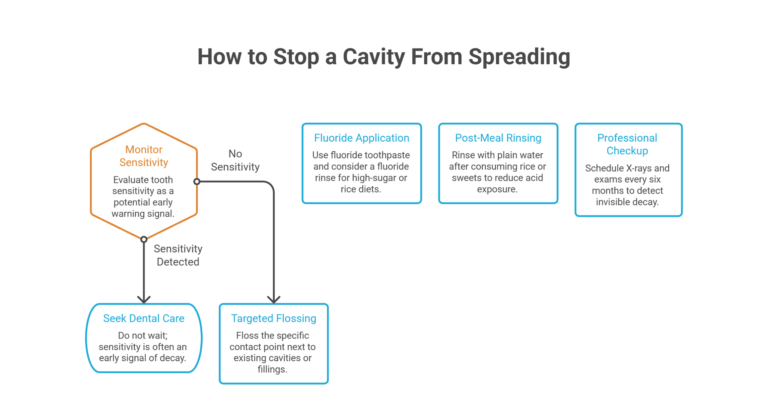
No spreading risk is almost always local, between touching or neighboring teeth, since that’s where bacteria and plaque physically transfer. A cavity on your lower-left molar doesn’t raise your risk on the upper-right side in any direct way.
Can a cavity in a milk tooth really discolor a permanent tooth?
Yes. This is a documented condition called a Turner’s tooth, where infection in the milk tooth affects the enamel of the permanent tooth forming beneath it.
Is it normal for milk teeth to get cavities even with regular brushing?
It’s common, mainly because young children lack the fine motor control for thorough brushing and because milk teeth have thinner enamel than adult teeth. This is exactly why parental supervision and professional checkups matter more in early childhood than many parents assume.
When to Seek a Diagnostic Evaluation
A cavity in a milk tooth isn’t a problem you can safely wait out. What happens to that tooth directly influences the alignment, appearance, and health of the permanent tooth developing right beneath it. Treating it early is quick and inexpensive. Ignoring it can mean years of orthodontic correction or a permanent tooth that comes in already compromised a trade nobody would consciously choose if they understood the connection.