
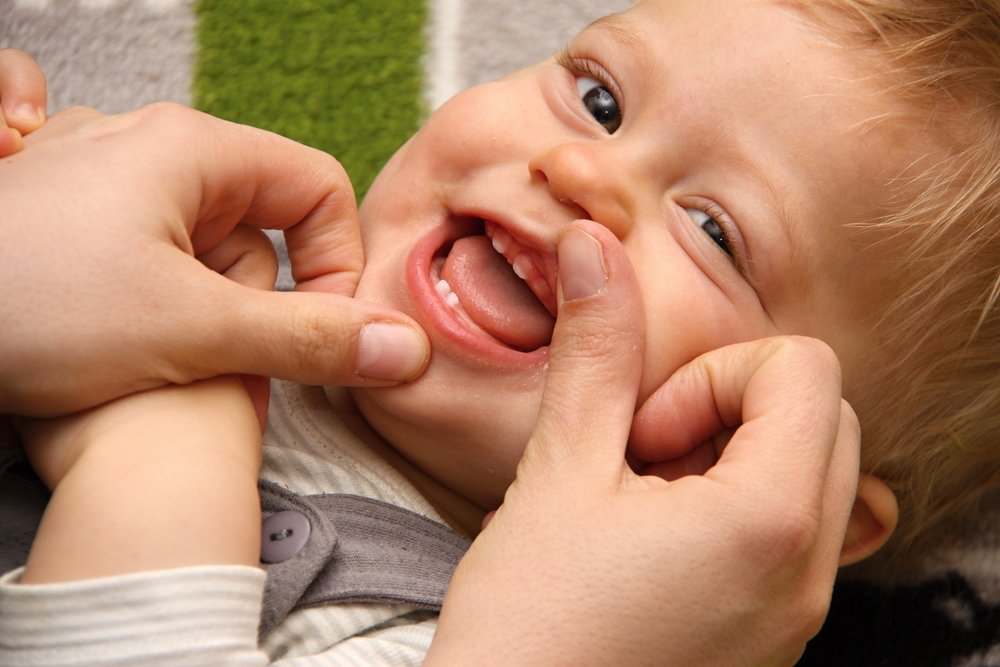
Many parents wonder when they should take their child to the dentist for the first time. According to experts, the ideal time is by your child’s first birthday or within 6 months of their first tooth appearing. Most parents are surprised by this – it feels early. But there are very real reasons behind it. Reasons that can protect your child from pain, prevent problems, and even save years of future treatment. Here are the real, research-backed reasons why that early visit is so important, explained with simple, real-life examples.
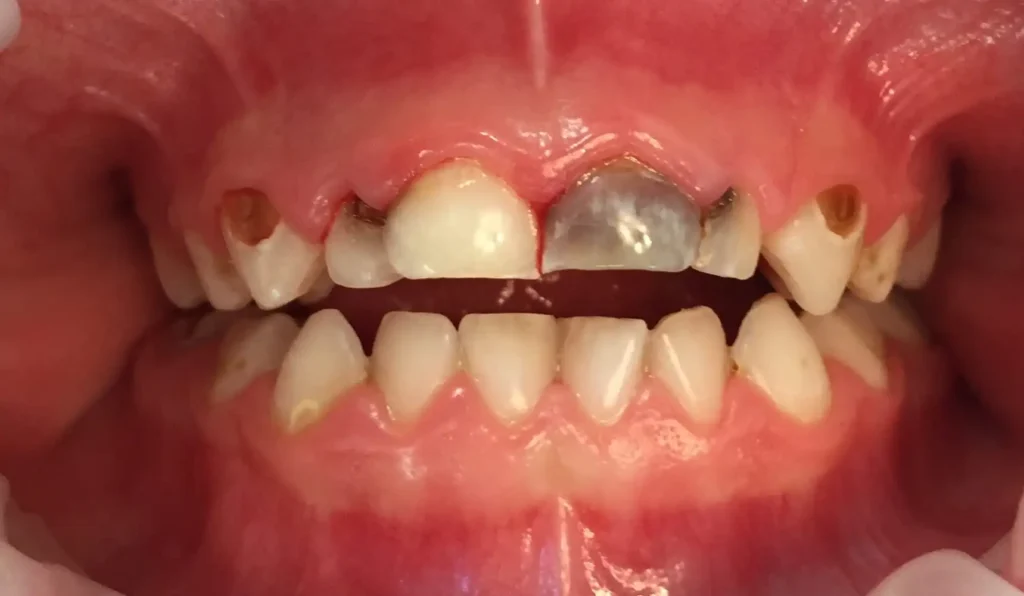
Baby teeth may be temporary, but the problems they develop are very real. Because the enamel is thinner, cavities spread much faster in small children.
Example-
A mother brought her 20-month-old son because she noticed “yellowish stains” on the upper teeth. They were actually early cavities. Had the child visited around age 1, the dentist could have prevented the damage entirely. Research Says AAPD studies show children who have their first dental visit by age 1 have significantly fewer cavities by school age.
In the first two years, teeth, jaws, and oral muscles develop rapidly.
Dentists can detect:
• Delayed or early eruption
• Tongue-tie or lip-tie
• Growth issues in the jaw
• Missing or extra teeth
• Habits that may affect development
Example-
A 14-month-old girl came for a routine check-up. The dentist noticed a subtle tongue-tie the parents hadn’t detected. Early intervention prevented the feeding and speech issues that would’ve shown up later. Early detection often changes the entire trajectory of a child’s oral development.
Small children often cannot explain dental pain. They simply cry, refuse certain foods, or wake up at night.
Example-
A 3-year-old girl came for her first dental visit with face swelling. A silent cavity had turned into an abscess. If she had seen a dentist by age 1, that tiny cavity could’ve been managed with a simple filling — instead of an emergency extraction.
Most parents don’t realise how early feeding habits affect teeth. A dentist can guide you on:
• When to start brushing
• How much toothpaste is safe
• Bottle vs. sippy cup routines
• Importance of limiting nighttime milk
• How snacks and juices lead to early decay
Example-
One mother routinely gave her toddler milk in the crib. At the first dental visit, the dentist explained how milk pools around the teeth and weakens enamel. Changing that one habit prevented early childhood caries.
Creating a “dental home” – a regular, familiar dentist – by age 1 has lifelong benefits. Research Insight Studies show children with an early dental home:
• Have fewer emergencies
• Need fewer fillings
• Require less complicated treatments later
Example-
A boy who visited the same dentist from age 1 had every issue caught early mild crowding, early plaque issues, enamel spots.
As a result, he never needed stressful, expensive procedures later.
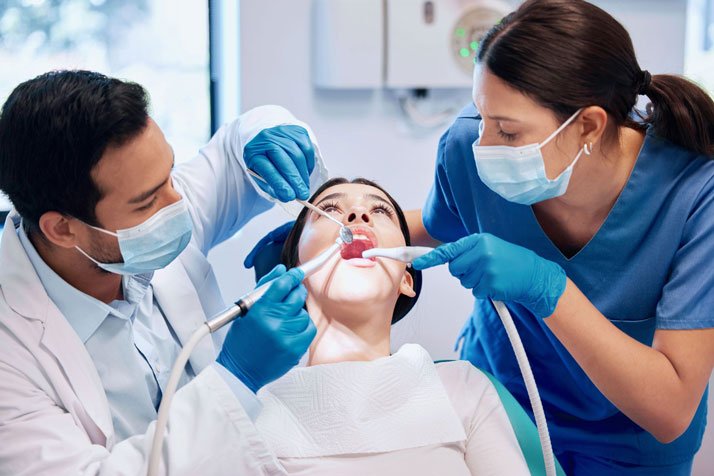
Dentists examine subtle signs related to:
• Thumb sucking
• Pacifier use
• Mouth breathing
• Grinding
• Lip biting
• Snacking patterns
Example-
A dentist noticed a 4-year-old was a chronic mouth breather. The child was referred to an ENT and diagnosed with enlarged adenoids. Treating it early prevented orthodontic problems and sleep disturbances later.
Even though the focus here is why visits are needed, one important truth remains: Children who go early don’t fear the dentist later. They see the clinic as something normal, not frightening. Study Finding Multiple studies show early visits decrease future dental anxiety and increase cooperation.
No. It’s the recommended age by AAPD and helps prevent early childhood cavities.
If no teeth appear by 12 months, the dentist will check growth and rule out developmental delays.
Every 6 months, or sooner if the dentist recommends it.
No. The visit is gentle, educational, and mostly observational.
Because untreated baby teeth can cause pain, infections, and affect adult tooth development.
Early visits prevent pain, protect teeth, and ensure healthy development. Give your child the best start with a gentle, expert pediatric dentist.
📍 Udana Wellness, Vasant Vihar, Delhi
📞 +91 9810821525
🌐 udanawellness.in
+91 9810821525
+91 9821621249
011 46595668
A 6/16, Vasant Vihar, Delhi - 110057
14 Poorvi Marg, vasant Vihar, Delhi-110057
udanawellness@gmail.com
Monday to Saturday
10 am to 7 pm

WhatsApp us