Your sleep quality can be influenced by many different factors, and your jaw and airway are only one possible part of the picture. However, if you regularly wake up tired despite getting enough sleep, experience nighttime teeth grinding, have morning jaw pain, or notice other signs of possible airway restriction, it may be worth discussing them with a professional.
Remember:
You get eight hours of sleep, but still wake up feeling tired. Your mattress is comfortable. You try to sleep on time. You may even follow a regular sleep routine. Yet, every morning, you still feel like you haven’t rested properly. So, what could be going wrong? Sometimes, the problem may not be your sleep routine at all. It may be related to the way your jaw, tongue, and airway are positioned. The shape of your jaw and the amount of space inside your mouth can affect where your tongue rests and how easily air moves through your throat while you sleep. Let’s understand this in simple terms.
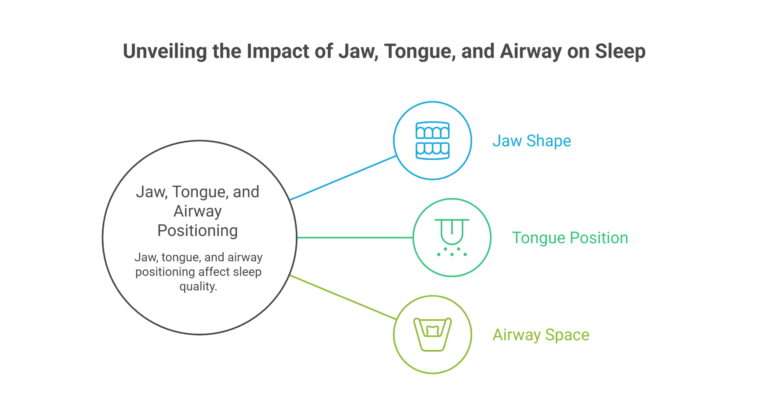
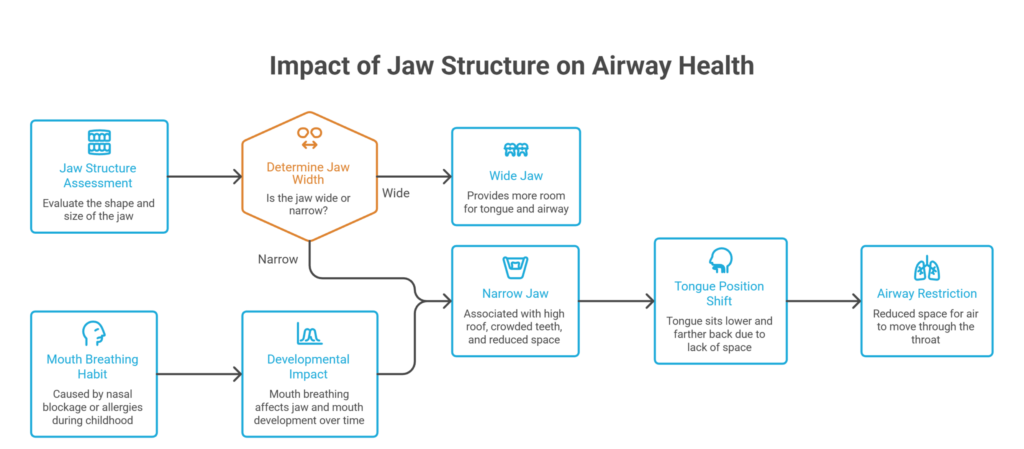
Your jaw does more than hold your teeth. Its shape also affects the amount of space available for your tongue and airway. Some people naturally have a wider jaw and more room inside their mouth. Others may have a narrower jaw, a high roof of the mouth, or crowded teeth. Your tongue normally rests against the roof of your mouth. But if there isn’t enough space, the tongue may sit lower and farther back. This can reduce the space available for air to move through your throat. Mouth breathing can also play a role. For example, if someone has nasal blockage or allergies for a long time during childhood, they may develop a habit of breathing through their mouth. Over time, this can affect how the mouth and jaw develop. A simple thing you can look for is the shape of your upper dental arch. A wider, rounded U-shaped arch generally provides more room for the tongue. A very narrow V-shaped arch, crowded teeth, or a tongue that appears too large for the available space may be signs worth discussing with a dental professional.
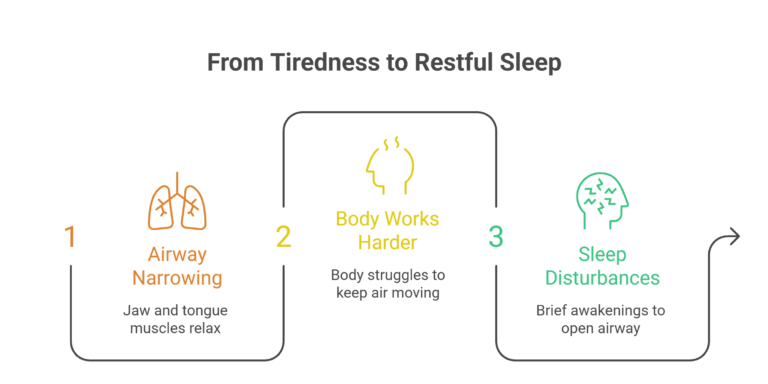
Getting enough hours of sleep does not always mean getting good-quality sleep. When you fall deeply asleep, the muscles around your jaw and tongue naturally relax. If your airway is already narrow, this relaxation can make the airway even smaller. Your body may then need to work harder to keep air moving. In some people, the brain responds by briefly disturbing sleep so the airway can open again. These interruptions may be so short that you don’t remember waking up. But they can still affect how restful your sleep feels. This is why someone can technically sleep for eight hours but still wake up tired, unfocused, or lacking energy. The relationship between the jaw, tongue, airway, and sleep is complicated, and tiredness can have many causes. So these signs should not automatically be taken as proof that your jaw is causing your sleep problems.
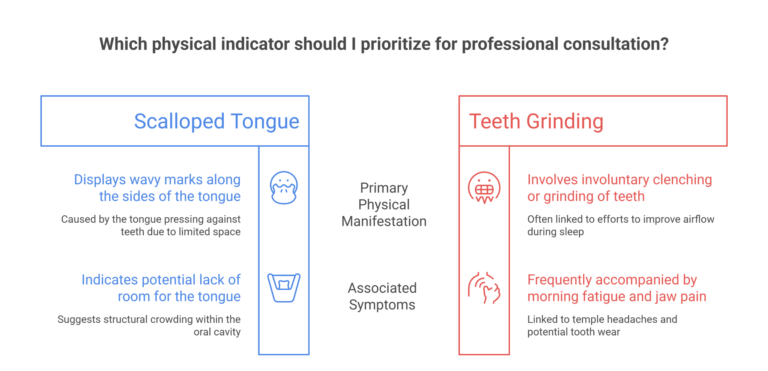
There are a few signs that may give you clues about what is happening inside your mouth. They don’t necessarily mean you have an airway problem, but they can be useful reasons to speak with a professional.
Have you ever looked at your tongue and noticed wavy marks along its sides? These marks are sometimes called a scalloped tongue. They can happen when the tongue repeatedly presses against the teeth. In some people, this may be related to having less room for the tongue inside the mouth.
You may wake up with a sore jaw or headache without realizing that you were clenching or grinding your teeth during the night. Teeth grinding is often associated with stress, but it can have several possible causes. In some cases, researchers believe that jaw movement during sleep may also be related to efforts to improve airflow when the airway becomes narrow. This doesn’t mean every person who grinds their teeth has an airway problem. But if grinding happens along with morning fatigue, jaw pain, or other symptoms, it may be worth investigating.
If you regularly wake up with a tight or painful jaw, or headaches around your temples, nighttime clenching or grinding could be one possible reason. Over time, repeated pressure on the teeth and jaw muscles can also cause tooth wear and discomfort around the jaw joint.
Dark circles under the eyes can have many causes, including genetics, allergies, lack of sleep, and other factors. If you also breathe through your mouth regularly, especially while sleeping, it may be worth discussing your breathing pattern with a professional.
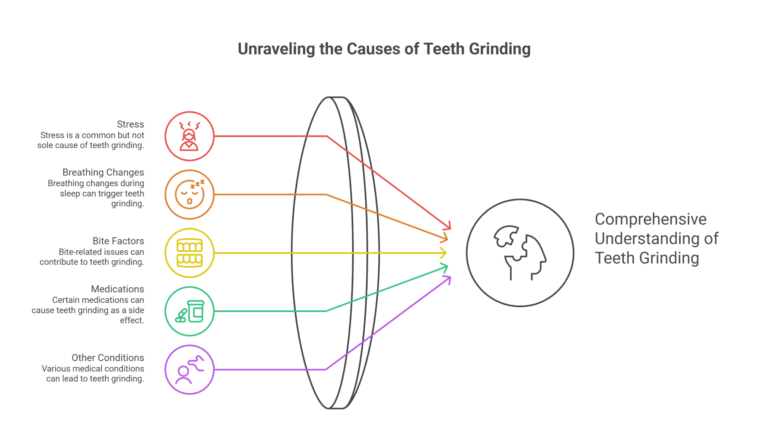
When someone grinds their teeth, the first explanation is often stress. And stress can certainly contribute to teeth grinding. But it isn’t always the complete story.
Some researchers have linked nighttime grinding and jaw movements with changes in breathing during sleep. The idea is that the body may move the jaw forward when the airway becomes restricted.
However, this is only one possible explanation. Teeth grinding can also be associated with stress, bite-related factors, medications, and other conditions. That’s why simply assuming the cause is stress may not always give you the complete picture.
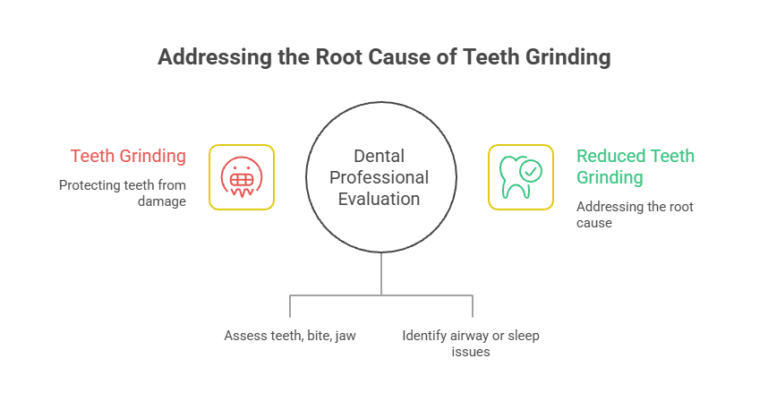
Nightguards can be useful for protecting teeth from damage caused by grinding. However, a nightguard mainly protects the teeth. It doesn’t necessarily address why you are grinding in the first place.
If your grinding is related to an airway or sleep problem, simply wearing a nightguard may not address the underlying issue. This is why it is important to understand the reason behind your symptoms rather than only trying to manage the visible effect. A dental professional can evaluate your teeth, bite, jaw position, and other oral signs and decide whether further evaluation is appropriate.
Many people assume that airway problems during sleep always come with loud snoring.
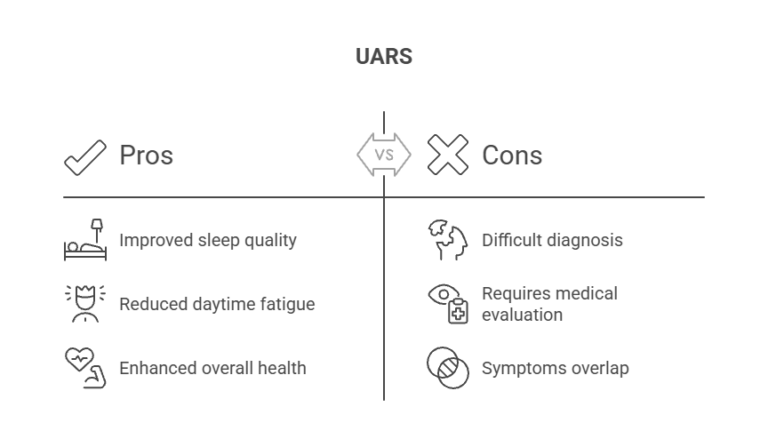
That’s not necessarily true. Some people may have difficulty moving air through a narrowed upper airway without producing loud snoring. One condition associated with this pattern is called Upper Airway Resistance Syndrome (UARS).
In simple terms, the airway may be narrower than normal, making breathing require more effort during sleep. This increased effort can contribute to repeated disturbances in sleep. However, symptoms such as tiredness have many possible causes, so UARS cannot be diagnosed simply by looking at symptoms. A proper medical or sleep evaluation may be needed.
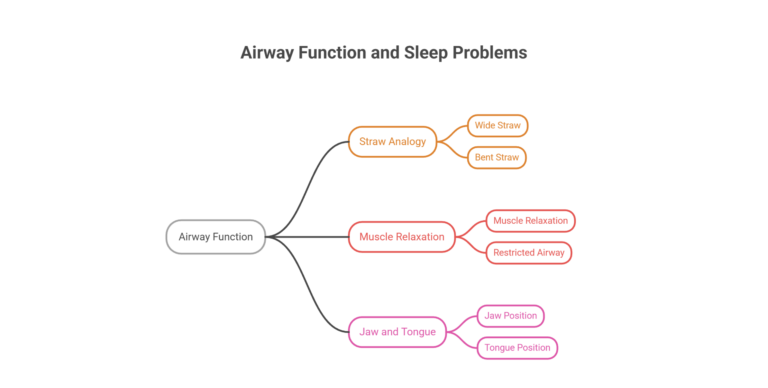
Here’s an easy way to understand the idea. Imagine drinking a thick milkshake through a straw. If the straw is wide and open, the liquid moves through it easily. But if the straw gets bent or squeezed, you have to work much harder to get the same amount of liquid through it.
Your airway works in a similar way.
If the space becomes narrower, your body may need to work harder to move air through it. During sleep, when the muscles relax, this can become more noticeable in people who already have a restricted airway. This is one reason why the relationship between your jaw, tongue, and airway deserves attention when sleep problems are persistent.
If you’re experiencing a combination of symptoms such as:
you may benefit from discussing them with a qualified dental professional. Depending on your symptoms, an airway-focused dentist, orthodontist, or myofunctional therapist may be involved. A dentist cannot diagnose sleep apnea on their own. A proper sleep evaluation or sleep study may be needed for diagnosis.
At Udana Wellness, concerns involving jaw alignment, bite, tongue position, and oral health can be looked at together rather than treating every symptom as a completely separate problem. The right approach depends on the individual, which is why a proper assessment is more useful than trying to diagnose yourself from symptoms alone.
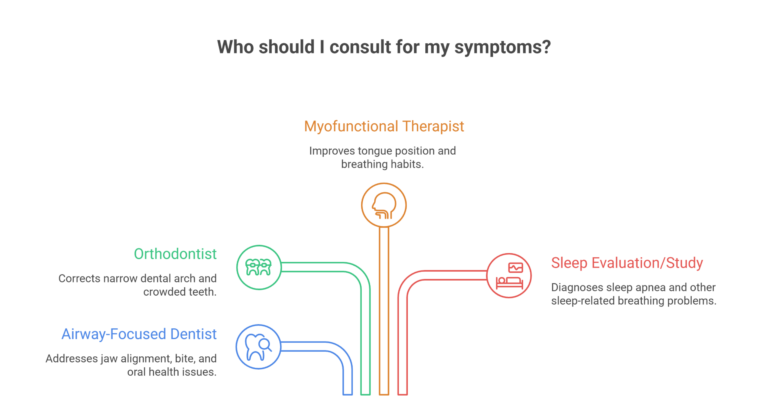
If you’re constantly waking up tired and can’t understand why, don’t immediately assume that you simply need to sleep longer. Your sleep problems could have many possible causes, from stress and lifestyle to allergies, sleep disorders, or other health issues. For some people, the position of the jaw, tongue, and airway may also be worth examining. The important thing is not to jump to a diagnosis based on one symptom. Instead, look at the bigger picture and get the right professional assessment.
At Udana Wellness, a comprehensive approach can help evaluate dental and jaw-related concerns and determine whether further airway or sleep evaluation may be appropriate.
Disclaimer: This article is for educational purposes only and does not replace professional medical advice, diagnosis, or treatment. If you have persistent sleep problems, excessive daytime tiredness, breathing difficulties during sleep, or significant teeth grinding, consult a qualified healthcare or dental professional.
No. Teeth grinding can have several possible causes, including stress, bite-related factors, medications, and sleep-related breathing problems. Grinding by itself does not prove that you have an airway issue.
Not necessarily. Teeth grinding and sleep-related breathing problems can occur together, but one does not automatically mean you have the other. If you have additional symptoms such as excessive daytime tiredness or witnessed breathing pauses, a professional evaluation may be appropriate.
You may notice a sore or tight jaw when you wake up, morning headaches, tooth sensitivity, or visible wear on your teeth. A partner or family member may also notice grinding sounds while you sleep.
Over time, repeated grinding and clenching can contribute to tooth wear, sensitivity, damage to dental restorations, and jaw muscle or joint discomfort.
Yes. Grinding usually involves the teeth rubbing or moving against each other, while clenching involves holding them tightly together without much movement. Both can put significant pressure on the teeth and jaw.
A dentist may identify signs that suggest a possible airway or sleep-breathing problem, but sleep apnea itself requires proper medical evaluation and, when appropriate, a sleep study.
No. Snoring is common with some sleep-related breathing conditions, but not everyone with an airway problem snores loudly.
A narrow or high-arched palate, crowded teeth, a scalloped tongue, tooth wear from grinding, and a lower jaw that sits farther back can be signs a dentist may consider during an evaluation. These signs alone do not confirm a sleep disorder.
+91 9810821525
+91 9821621249
011 46595668
A 6/16, Vasant Vihar, Delhi - 110057
14 Poorvi Marg, vasant Vihar, Delhi-110057
udanawellness@gmail.com
Monday to Saturday
10 am to 7 pm
WhatsApp us